

✅ What You Can Do
- Request a free copy of your CLUE report under the Fair Credit Reporting Act (FCRA)
- Review the report for errors or outdated claims
- Consider paying out-of-pocket for smaller repairs to avoid adding to your claims history
- Install leak detection or security systems to prevent the most common claim triggers
- Ask your agent how long past claims affect your eligibility with other carriers
References:
- LexisNexis CLUE Report Information
- Consumer Reports – What’s in a CLUE Report?
- III.org – Understanding Home Insurance Underwriting
🚫 Reason #4: Your Insurance Provider Is Leaving Your State
Big insurers like State Farm, Farmers, and Allstate are pulling out of high-risk states due to extreme losses and regulatory limits. Even loyal customers are being dropped.

According to a 2023 report from the American Property Casualty Insurance Association (APCIA), over 60% of insurers nationwide reported reducing coverage availability in at least one high-risk state. This trend has only intensified in 2024 and 2025. In California, major carriers like State Farm and Allstate have stopped writing new homeowners policies entirely, citing excessive wildfire losses and regulatory limits that prevent adequate rate increases. Meanwhile, Farmers Insurance pulled out of Florida, impacting more than 100,000 policyholders after sustained hurricane damage and rising litigation costs. Even in less headline-grabbing states, like Colorado and Louisiana, smaller regional insurers have gone insolvent or exited, leaving homeowners scrambling for FAIR Plan options. If your carrier is reducing exposure or leaving your ZIP code, you may be dropped even with no claims or infractions on your record.
🏃 States Most Affected in 2025
-
California – wildfires, rate caps
-
Florida – hurricane litigation and flood risk
-
Louisiana – insurer insolvencies
-
Texas & New York – coastal risk zones and market shrinkage
✅ What You Can Do
-
Ask your provider if they’re still underwriting in your ZIP code
-
Get quotes from independent agents with access to niche markets
-
Explore surplus lines carriers or non-admitted insurers
-
Apply to your state’s FAIR Plan as a last resort
-
Bundle or add umbrella coverage to increase your retention odds
References
🔍 Reason #5: You Failed an Insurance Inspection
Even if you’ve had a policy for years, a failed inspection can trigger immediate cancellation. Insurers now rely on aerial photos and AI tools to flag properties with poor upkeep.
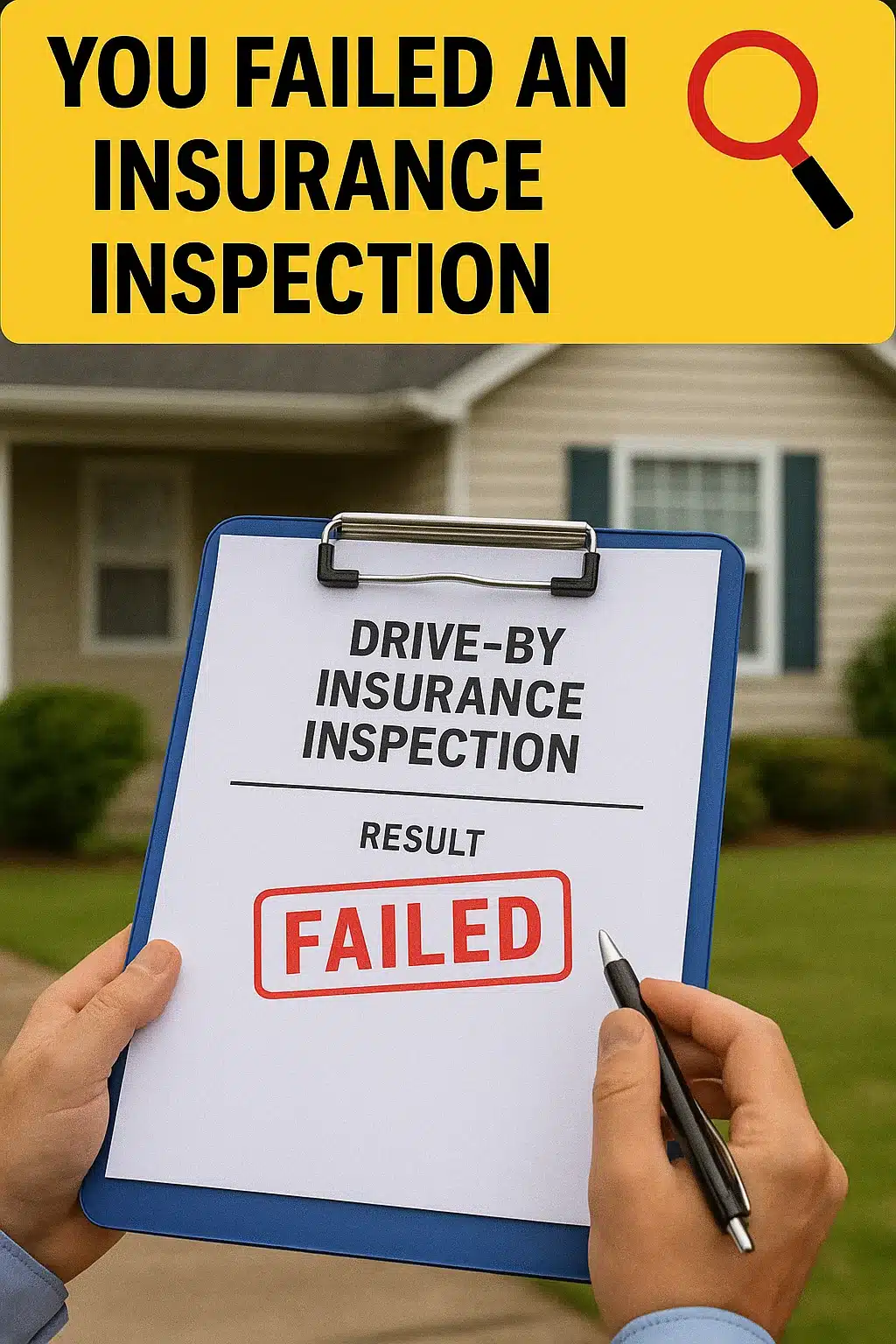
Many homeowners don’t realize that insurance inspections have become far more sophisticated in recent years. Carriers are no longer relying solely on in-person visits—they’re leveraging satellite imagery, drone flyovers, and even AI-powered analytics to flag risks. A cracked driveway, cluttered backyard, or leaning fence could be interpreted as signs of poor maintenance, even if you’ve kept the home structurally sound. Some companies will issue a non-renewal without ever knocking on your door, simply based on visual cues pulled from public data sources or aerial scans. If you’re caught off guard, you may only have 30–60 days to make repairs—or face a full policy cancellation.
✅ What You Can Do
-
Perform a full exterior property check before renewal
-
Trim trees, remove debris, and repair broken fencing
-
Clean gutters, fix visible roof damage, repaint siding
-
Request a copy of any inspection reports used in your evaluation
-
Submit photo proof of completed repairs to your insurer
🧭 What to Do If You’ve Already Been Dropped
Getting dropped by your insurer can feel overwhelming—but it’s not the end of the road. The key is to act quickly and strategically. Start by securing temporary coverage through your state’s FAIR Plan or surplus lines market, even if it’s more expensive—this ensures you don’t lapse and risk mortgage violations. Then, begin improving your home’s insurability by documenting repairs, upgrades, or added safety features like security systems and leak detection. Keep a digital folder with before-and-after photos, inspection reports, and maintenance receipts. This kind of preparation not only helps you appeal denials but makes you far more attractive to alternative insurers or brokers willing to work with higher-risk properties.
If your policy has already been canceled or non-renewed, take action now:
-
📄 Request your CLUE report to review your risk profile
-
🔎 Use an independent broker to shop multiple insurers and or shop online
-
🛠️ Make any necessary upgrades to reduce future risk
-
📑 Apply for state FAIR Plan coverage if needed
- 🖼️ Keep detailed records and photo evidence of all improvements.
✅ Final Word: Prevention Is Protection
The 2025 homeowners insurance landscape isn’t just shifting—it’s unraveling in real time. From natural disasters to policy shakeups, millions of responsible homeowners are facing non-renewals, surprise cancellations, and skyrocketing premiums through no fault of their own. What was once a stable, reliable part of homeownership has become unpredictable and, in some areas, nearly inaccessible.
But here’s the good news: you’re not powerless. Whether you’re in a high-risk zone, living in an aging home, or just feeling uneasy about your insurer’s long-term commitment, there are proactive steps you can take today that may save you from being blindsided tomorrow. Small updates to your property, a review of your claims history, and strategic conversations with your insurance agent can dramatically improve your standing—and possibly your rates. And if your current provider is walking away? You have options. Independent brokers, regional carriers, surplus line insurers, and FAIR Plan programs are all lifelines that can keep you covered while you work to strengthen your property’s profile.
Don’t let a cancellation letter be the wake-up call. Take this information seriously, share it with other homeowners, and treat your insurance policy like a living document—something to manage, monitor, and maintain. In 2025 and beyond, staying insured isn’t just smart—it’s survival.


